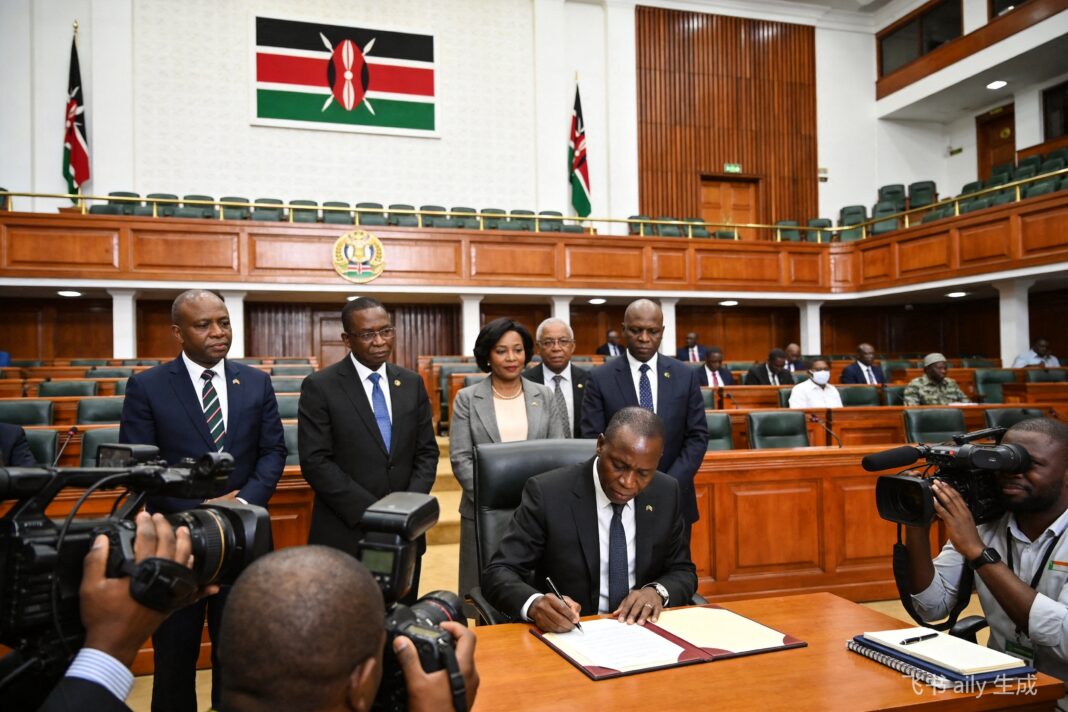

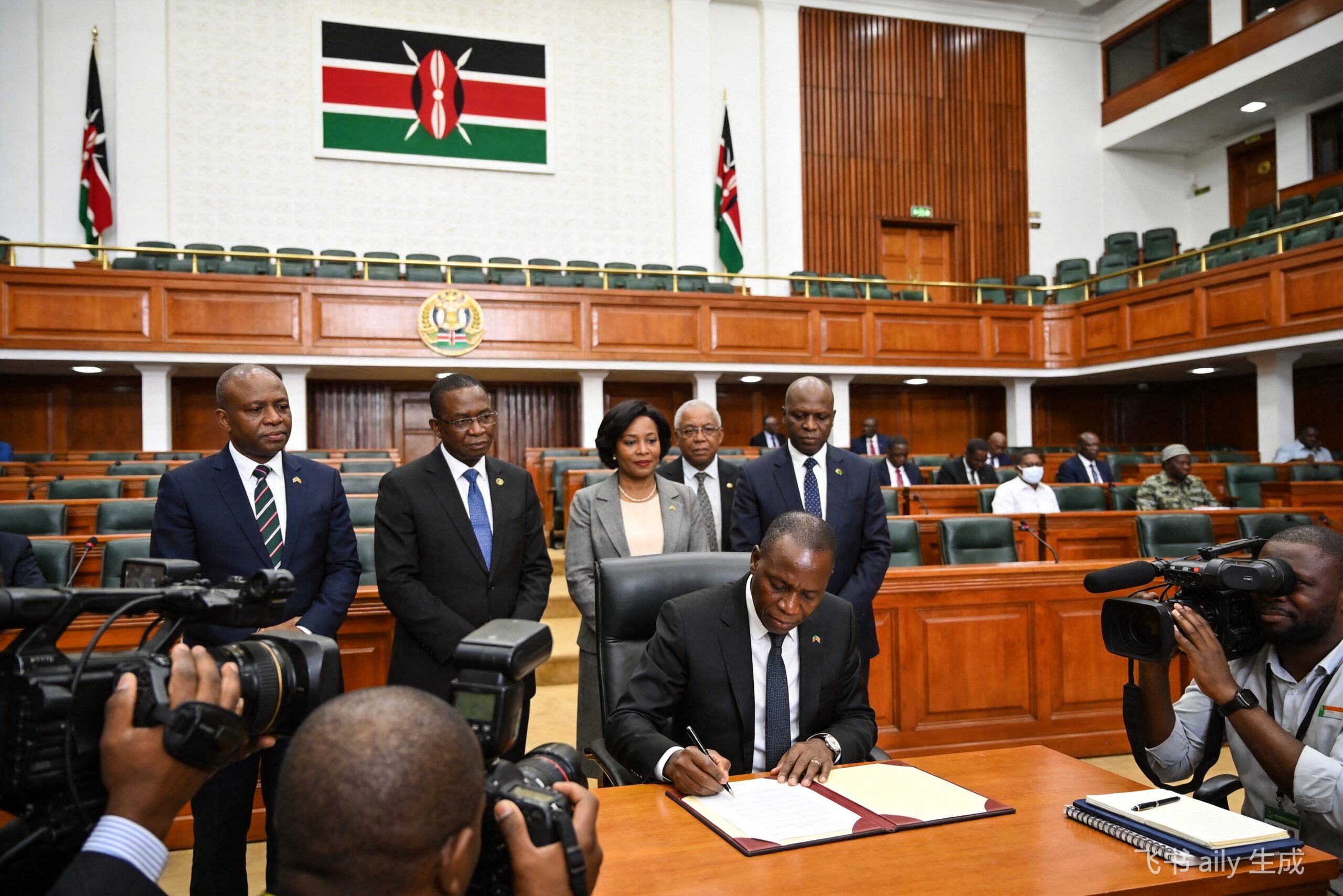
 President William Ruto has assented to the Supplementary Appropriations Bill, 2026, raising total public spending to KSh 4.695 trillion ($36.23 billion), up from KSh 4.301 trillion ($33.2 billion) — an increase of KSh 393 billion ($3.03 billion) just three months before the end of the 2025/2026 fiscal year.
Security Takes the Largest Share
The security sector receives the largest allocation — an additional KSh 60 billion, including KSh 11.9 billion for the State Department for Internal Security and National Administration, KSh 3.9 billion for ongoing security operations, KSh 2 billion for the National Integrated Security Command and Control System (NISCCS), KSh 2 billion for compensation of victims of recent demonstrations, and KSh 4 billion for police modernisation. The Independent Electoral and Boundaries Commission (IEBC) also receives KSh 2.9 billion to settle pending legal bills.
Education and Health
The education sector receives KSh 45.28 billion in additional funding. The Teachers Service Commission is allocated KSh 24.2 billion to cover salary shortfalls and health insurance contributions for teachers, while the Higher Education Loans Board (HELB) receives KSh 4.1 billion, bringing its total to KSh 45.6 billion. Universities benefit from KSh 3.88 billion to clear outstanding salary arrears from the 2017–2021 Collective Bargaining Agreement.
The health sector receives KSh 4.7 billion through the State Department for Medical Services, KSh 4 billion to settle pending bills of the defunct National Health Insurance Fund (NHIF), KSh 5.4 billion for the doctors internship programme (total: KSh 9.8 billion), and KSh 2.5 billion for Moi Teaching and Referral Hospital.
Infrastructure and Blue Economy
The Affordable Housing Programme receives KSh 25 billion to accelerate implementation under the Bottom-Up Economic Transformation Agenda (BETA). The Horn of Africa Gateway development projects receive KSh 4.5 billion. The agriculture sector receives over KSh 17 billion, including KSh 10 billion for the fertiliser subsidy programme. The Blue Economy and Fisheries Department is allocated KSh 350 million to organise an Oceanic Conference in Mombasa and Kilifi in June.
Financing the Increase
To finance the expanded budget, the government is prioritising enhanced non-tax revenue streams, including privatisation and securitisation initiatives. The Kenya Revenue Authority receives an additional KSh 17.6 billion to strengthen tax collection efforts.
The move comes amid growing scrutiny over public debt and fiscal management, with economists and citizens raising concerns over potential wastage and unsustainable borrowing.
Reported by Ronald Kipruto / The Standard