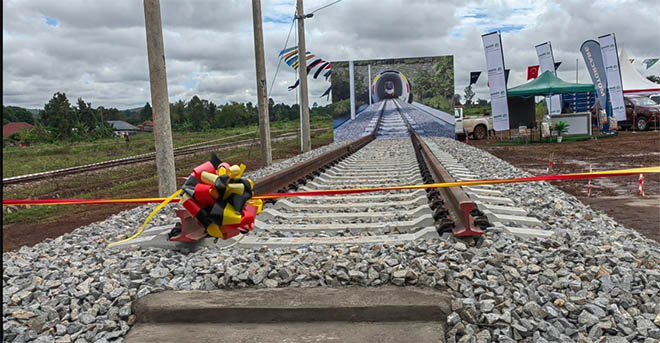



In a landmark ceremony attended by thousands of spectators, Kenyan President William Ruto and Ugandan President Yoweri Museveni broke ground on the next phase of the Standard Gauge Railway (SGR) project, a multi-billion dollar infrastructure initiative set to transform East African trade and connectivity.
The Naivasha-Kisumu-Malaba SGR extension represents a critical link in the larger vision of connecting the port of Mombasa to the landlocked nations of Uganda, Rwanda, Burundi, and the Democratic Republic of Congo. Once completed, the railway will significantly reduce transportation costs and transit times for goods moving between the Indian Ocean and the African interior.
“The SGR will bring life to our aspiration for true regional integration,” President Ruto declared at the ceremony held in Kibos, Kisumu County. “For 130 years, the old metre gauge railway served as the lifeline of regional commerce, but neglect and disrepair have left it unable to meet modern demands. Today, we write a new chapter.”
The railway extension, which had stalled for six years due to funding challenges, is expected to create thousands of jobs during construction and operation phases. Agricultural producers in western Kenya and Uganda stand to benefit particularly from the improved access to international markets through the port of Mombasa.
Unlike the initial Mombasa-Nairobi phase, which was financed primarily through Chinese loans, the new extension will be funded through a revenue securitization model. This approach marks a significant shift in Kenya’s infrastructure financing strategy, aiming to reduce external debt dependency while leveraging existing railway assets.
Ugandan President Museveni emphasized the transformative potential of the project for his country’s economy. “Uganda has waited too long for reliable, cost-effective access to the sea. This railway will unlock our economic potential and strengthen our integration with the East African Community.”
The new SGR phase will feature modern electric locomotives capable of hauling cargo at speeds up to 120 kilometers per hour, a dramatic improvement over the ageing metre gauge system it replaces. Passenger services are also planned, with travel time between Nairobi and Kisumu expected to drop to under three hours.
With construction now officially underway, both governments have expressed optimism that the project will be completed within the planned timeline.